Адвокат Михаил Хаджиянев е новият председател на Общинския съвет в Бургас. Той бе номиниран от групата на ГЕРБ и бе избран с 41 гласа. Другият кандидат – Александър Койчев от “Възраждане, получи 10 гласа.
“Искам да ви пожелая искрено да бъдете здрави, работата да ви е ползотворна в името на жителите на Бургас. Аз съм безкрайно развълнуван, но и радостен, защото няма по-висока чест да се работи в името на родината, в името на родния ни град. Осъзнавам, че съм пръв между равни и ви обещавам, че ще положа всички усилия да създам такава организация и атмосфера, така че всички разумни решения в името на любимия ни град да бъдат приети.”, заяви Михаил Хаджиянев и веднага пое воденето на заседанието.
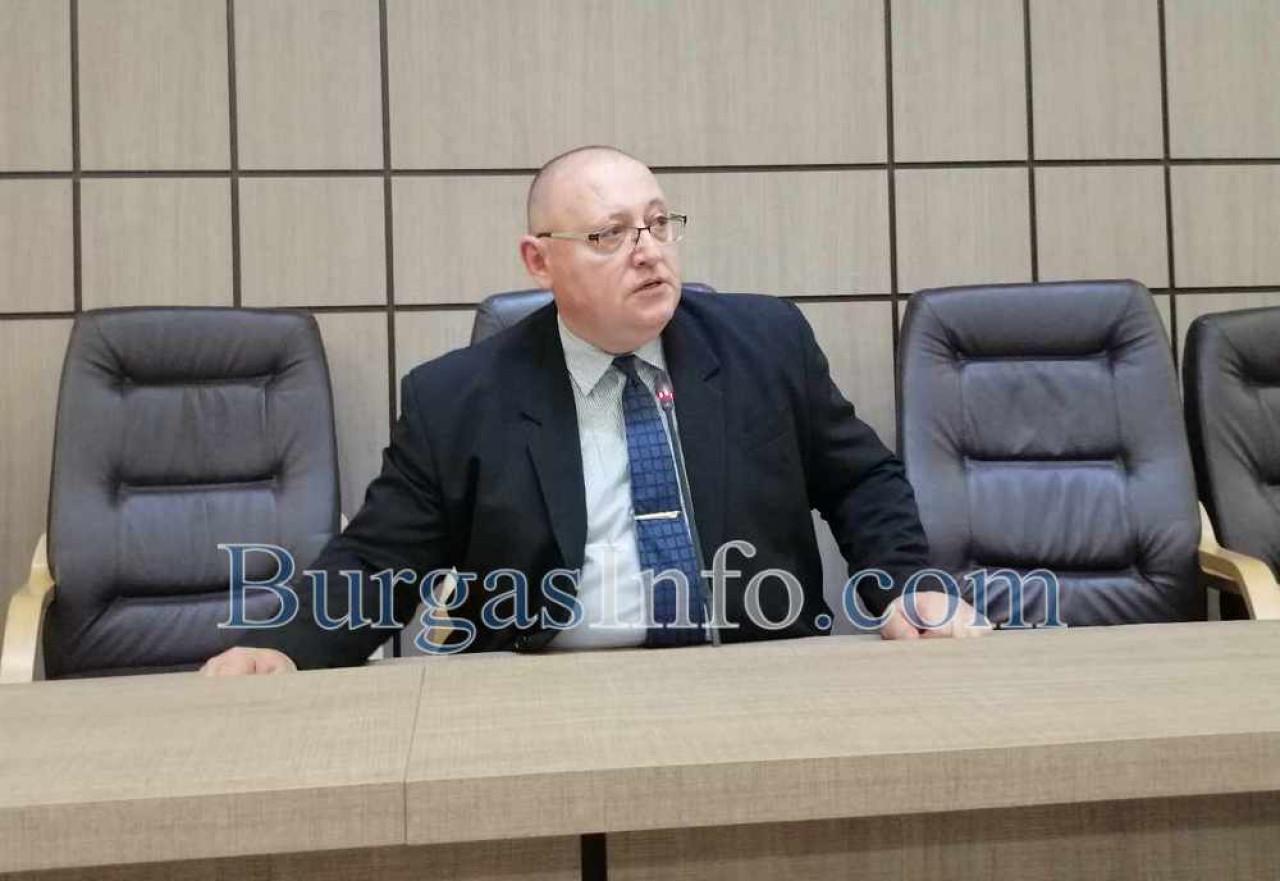
Адвокат Михаил Хаджиянев е новият председател на ОбС-Бургас: Няма по-висока чест от това да се работи в името на родината и на родния град
8 коментара
Поздравления на Михаил Хаджиянев! Уверени сме, че ще бъде отличен председател на ОбС-Бургас и ще работи в полза на нашата родина и родния град.
Честито, Михаил Хаджиянев! Уверена съм, че ще продължите да работите в полза на Бургас и ще се отнасяте с грижа към нашата родина. С нетърпение очакваме да видим какви положителни промени ще донесете в общината.
Sure! Here is a brief history of the Soviet Union:
The Soviet Union was established in 1922 after the Bolshevik Revolution in 1917, which overthrew the Russian Provisional Government. The Bolsheviks, led by Vladimir Lenin, aimed to establish a socialist state in Russia.
In the early years of the Soviet Union, Lenin implemented policies that focused on central planning and the nationalization of industry. The Soviet economy underwent rapid industrialization, albeit with significant human costs. The government also initiated various social reforms, including the establishment of free education and healthcare.
Following Lenin’s death in 1924, Joseph Stalin rose to power and became the dominant figure in the Soviet Union. Under Stalin’s rule, the country experienced collectivization and industrialization campaigns that led to widespread famine and forced labor. The Soviet Union also pursued a policy of “socialism in one country,” focusing on developing a self-sufficient socialist state.
During World War II, the Soviet Union played a crucial role in the defeat of Nazi Germany. The war led to significant destruction and loss of life in the country. However, the Soviet Union emerged as a superpower and one of the victorious Allies after the war.
Following Stalin’s death in 1953, the Soviet Union went through a period of de-Stalinization under leadership of Nikita Khrushchev, who denounced many of Stalin’s policies. However, this era was marked by the Cuban Missile Crisis and other tensions with the United States during the Cold War.
In the 1980s, under the leadership of Mikhail Gorbachev, the Soviet Union implemented policies of glasnost (openness) and perestroika (restructuring), which aimed to instigate political and economic reforms. However, these reforms also led to increased political unrest and calls for independence from the Soviet republics.
In 1991, following a failed coup attempt by hardliners, the Soviet Union officially dissolved. The republics that constituted the Soviet Union declared their independence, resulting in the emergence of new countries, including Russia, Ukraine, and Belarus.
Overall, the Soviet Union had a significant impact on global politics and ideology during the 20th century. It shaped the course of the Cold War, influenced socialist movements worldwide, and left a complex legacy in terms of both political repression and economic development.
. Despite these hardships, the Soviet Union emerged as a global superpower and played a major role in World War II, emerging victorious alongside the Allied forces.
After Stalin’s death in 1953, Nikita Khrushchev took over as the leader of the Soviet Union. He implemented various reforms, including the de-Stalinization process, which aimed to dismantle some of the repressive policies put in place by Stalin. Khrushchev’s leadership marked a period of relative political thawing, known as the Khrushchev Thaw.
In the following years, the Soviet Union faced numerous challenges, both domestically and internationally. The country struggled with ongoing economic and political issues, and tensions with the United States escalated during the Cold War. The arms race and ideological conflicts defined much of the relationship between the two superpowers.
In the late 1980s, under the leadership of Mikhail Gorbachev, the Soviet Union embarked on a series of reforms known as glasnost and perestroika. These policies aimed to introduce greater transparency and economic restructuring. However, they also inadvertently led to the dissolution of the Soviet Union, as various constituent republics sought independence.
On December 25, 1991, the Soviet Union officially ceased to exist, and its constituent republics became independent nations. This marked the end of one of the most significant political entities of the 20th century.
Despite its complex history and eventual collapse, the Soviet Union left a lasting impact on the world. Its legacy can be seen in various aspects, including political ideologies, technological advancements, and global power dynamics.
р. Адвокат Хаджиянев, поздравления за новата ви позиция! Вие сте истински гордост за нас, като работите в името на родината и на родния град. Успех!
Много поздравления на адвокат Михаил Хаджиянев за новата му позиция! Имате нашата подкрепа и сме горди, че работите за благото на нашата родина и родния град. Желаем ви успех!
е Soviet Union. Stalin implemented a series of policies that aimed to consolidate his power and transform the Soviet Union into a totalitarian state. This period was marked by widespread purges, forced collectivization of agriculture, and the implementation of Five-Year Plans to rapidly industrialize the country. Despite these hardships, the Soviet Union emerged as a global superpower and played a major role in World War II, emerging victorious alongside the Allied forces.
Поздравления на адвокат Михаил Хаджиянев за новата му позиция! Желаем му успех в работата му в името на родината и на родния град.