
„Пътят до Бродилово най-после ще бъде ремонтиран. Хората в селото ще получават здравни грижи. И знаете ли защо ще се случи това? Защото няма да струва много. Защото бюджетът на общината може да покрие този разход. И защото е в полза на всички хората, а не на един“, съобщи след среща с местните жители кандидатът за кмет на община Царево Емил Пейчев от „Продължаваме промяната-Демократична България“.
„Заедно с кандидата ни за кмет инж. Радко Денев (за с. Бродилово) и част от кандидатите ни за общинските съветници гостувахме на задружните членове на пенсионерския клуб в село Бродилово. В тази среща с хората от Бродилово никой не поиска нищо лично за себе си.
Поискаха да бъде ремонтиран пътя до тяхното село, за да пътуват всички удобно и лесно.
Поискаха поне веднъж в седмицата някой да им провежда медицински прегледи в селото.
Поискаха бъдещият кмет на Царево да отива при тях, за да ги види и чуе на място, а не те да чакат пред вратата на кабинета му в Общината. Поискаха това. Поискаха редовен транспорт до с. Бродилово. И ще им бъде дадено. Ако получа доверието ви и ми възложите отговорността да ръководя община Царево, така ще бъде.“, добави Пейчев.
Срещата коментира и кандидатът за кмет на селото от „Продължаваме промяната-Демократична България“ Радко Денев, който преди дни е участвал и в разговор на опонента си Мартин Русинов от ОБТ Български лейбъристи с избиратели.
„Срещата в с. Бродилово мина повече от брилянтно. На срещата на Мартин с избирателите казах: не се натискам да ставам кмет. Аз съм инженер с много опит и ако изберете Мартин за кмет, мога да помагам в решаването на технически проблеми. Не съм казал да не се гласува за ПП-ДБ. Беше една приятна среща с много разговори, които завършихме с похапване на хубава торта. А днес на срещата с Емил Пейчев и избирателите казах: Пенсията ми е голяма, но няма да казвам колко е, защото ще ми завидите. Ако ме изберете, ще ме лишите от някои дребни удоволствия – следобедна дрямка, екскурзии и др.“, обяви с хумор публично Радко Денев.
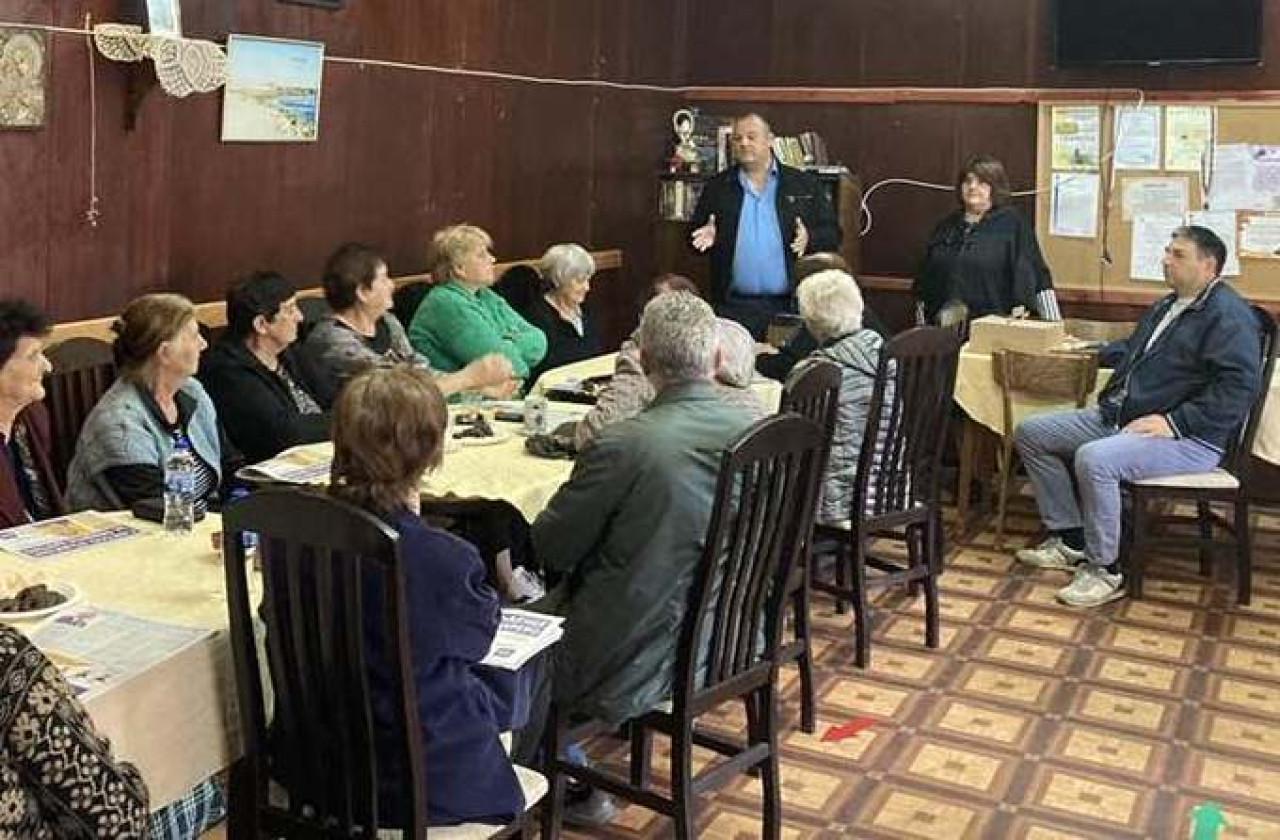
Eмил Пейчев в Бродилово: Хората не искат нищо лично, а път и здравни грижи. Ще ги имат!
29 коментара
Точно така! Хората се нуждаят от основни неща, които да им помогнат в ежедневието им.
Път и здравни грижи са основни за добро качество на живот. Благодаря на Емил Пейчев за положените усилия!
Горещо подкрепям Емил Пейчев и неговите усилия в Бродилово. Всеки човек има право на път и здравни грижи, които са от съществено значение за благополучието ни. Благодаря му за това, че се грижи за нас!
Prewriting can include activities such as brainstorming, outlining, and researching. Some specific steps to prewriting include:
1. Brainstorming: Take a few minutes to jot down any ideas or concepts related to your writing topic. Don’t worry about organizing them at this stage, just focus on getting all your thoughts down on paper.
2. Conduct research: If your writing project requires factual information or evidence, spend some time gathering relevant sources and taking notes. This step will help you gather the necessary information to support your writing.
3. Outlining: Once you have generated ideas and done some research, create an outline to organize your thoughts and structure your writing. An outline acts as a roadmap for your paper, helping you define the main points, subpoints, and supporting details.
4. Freewriting: If you need to generate more ideas or develop a clearer understanding of your topic, try freewriting. Set a timer for ten minutes and write continuously without worrying about grammar or structure. Freewriting can help you discover new ideas or insights.
5. Listing: Make a list of specific details or examples that support your main points or arguments. This strategy helps you gather evidence and ensures you have enough concrete examples to develop your writing.
6. Clustering or mind mapping: Start with a central idea or concept and create a cluster or mind map by adding related ideas or subtopics. This type of visual representation can help you see connections between different ideas and organize your thoughts.
7. Researching: Gather information from various sources to support your writing. This step may involve reading books, articles, or academic papers, or conducting interviews or surveys.
8. Note-taking: Take concise notes while conducting research or reading relevant materials. This will help you remember important details and ensure you don’t accidentally plagiarize when incorporating information into your writing.
9. Discussing with others: If appropriate, discuss your writing topic with others. This can be a helpful way to gain different perspectives and receive feedback or suggestions.
10. Reflecting: Take a few moments to reflect on your prewriting efforts and evaluate whether you have generated enough ideas and information to move on to the next stage of writing. Consider if there are any gaps in your thinking or if there is further research or brainstorming required.
Благодаря за съветите! Важно е да знаем как да се подготвим предварително за писане, за да имаме ясна структура и информация, която да подкрепя текста ни.
Много се радвам, че Емил Пейчев в Бродилово работи за благото на хората и ги подкрепя с път и здравни грижи!
Замечателно! Благодарение на Емил Пейчев, хората от Бродилово ще получат необходимия път и здравни грижи.
тline can be as simple or detailed as needed, but it should include the main points and supporting details that you want to include in your writing.
4. Setting goals: Determine what you want to achieve with your writing, whether it’s to inform, persuade, entertain, or something else. Setting clear goals will help guide your writing and keep you focused.
5. Planning your time: Consider how much time you have available for writing and break it down into manageable chunks. Set deadlines for each step of the writing process to help you stay on track.
6. Review and revise: After you have completed your initial draft, take the time to review and revise your work. Look for errors in grammar, punctuation, and spelling, as well as areas where you can improve clarity and effectiveness.
Prewriting is an important step in the writing process, as it helps you gather and organize your thoughts before you start writing. By taking the time to prewrite, you can create a more coherent and well-structured piece of writing.
подозирам, че Емил Пейчев не е в състояние да осигури път и здравни грижи на хората в Бродилово
It appears that you may have entered your question incompletely, as there is no specific question or topic mentioned. Please provide more details or ask a specific question so that I can assist you better.
A genetic counselor is a healthcare professional with specialized training in genetics. They work with individuals or families who may be at risk for genetic disorders or conditions.
Genetic counselors assess the risk of various genetic disorders by reviewing medical and family history, and may arrange for genetic testing if necessary. They then provide support and guidance to individuals and families who may be facing difficult decisions about their health and future.
In addition to providing education and emotional support, genetic counselors also help individuals and families understand their test results and the potential implications. They may discuss options for prevention or management of genetic conditions, and provide referrals to other medical specialists or support groups if needed.
Genetic counselors work in a variety of settings, including hospitals, clinics, and research institutions. They may also play a role in conducting research and contributing to advancements in the field of genetics. Overall, their goal is to ensure that individuals and families have the information and support they need to make informed decisions about their health based on their genetic predispositions.
Healthcare professionals or support services as needed. Overall, genetic counselors play a crucial role in helping individuals and families make informed decisions about their genetic health and wellbeing.
ии те имат ще бъдат много полезни за нашата общност. Определено са нужни пътища и здравни грижи, които да се грижат за всеки един от нас. Благодаря на Емил Пейчев за ангажимента му да помага на хората в Бродилово!
зителни открития. Напред, г-н Пейчев!
Изглежда обещанията на Емил Пейчев за път и здравни грижи в Бродилово са на път да се осъществят! Необходимите подобрения виждаме в бъдещето!
Впечатляващо видео! Благодаря, че споделихте тази прекрасна екскурзия! 🏞️🌊
There are many opinions on what makes a good leader, but some common qualities often mentioned include:
– Strong communication skills: Good leaders are able to clearly and effectively communicate their vision and goals to their team. They are also skilled listeners who can understand and address the needs and concerns of their team members.
– Empathy and Emotional intelligence: Effective leaders have the ability to understand and connect with the emotions and experiences of their team members. They are able to create a supportive and positive work environment by showing empathy and understanding.
– Vision and strategic thinking: A good leader has a clear vision of what they want to achieve and can develop and communicate a strategic plan to achieve that vision. They are able to think critically and make informed decisions to move their team towards their goals.
– Integrity and trustworthiness: Good leaders are honest, trustworthy, and have strong moral character. They lead by example and are consistently reliable and dependable.
– Collaboration and delegation: Great leaders know the importance of teamwork and collaboration. They are able to delegate tasks and responsibilities effectively, matching each team member’s skills and strengths to the appropriate tasks.
– Adaptability and resilience: Leaders need to be flexible and adaptable in order to navigate change and overcome obstacles. They are able to quickly adjust their strategies and plans as needed.
– Empowers and motivates others: Effective leaders empower their team members by giving them the resources, support, and autonomy they need to succeed. They also motivate and inspire their team to reach their full potential.
– Continuous learning: Good leaders never stop learning. They are committed to self-improvement, seeking feedback and actively pursuing opportunities for growth and development.
Overall, a good leader is someone who can inspire and motivate their team, communicate effectively, and make well-informed decisions that move the team towards their goals.
The ability to envision the future and develop a strategic plan to achieve their goals. They can analyze situations, identify opportunities, and make informed decisions that will benefit their team and organization.
– Integrity and honesty: Trustworthiness is a crucial quality for a leader. They must be transparent, honest, and ethical in their actions and decision-making, gaining the trust and respect of their team.
– Confidence and resilience: Leaders must have confidence in themselves and their abilities. They should be able to handle challenges and setbacks with resilience, keeping their team motivated and focused on the task at hand.
– Adaptability and flexibility: The ability to adapt to change is essential for a leader. They should be open-minded and willing to modify their tactics and strategies as needed, ensuring success in evolving environments.
– Accountability and responsibility: Good leaders take ownership of their actions and accept responsibility for their mistakes. They do not blame others but instead use failures as learning opportunities and work towards improvement.
– Empowerment and delegation: Effective leaders empower their team members, giving them the autonomy and trust to take on responsibilities and make decisions. They delegate tasks strategically, recognizing the strengths and expertise of each individual.
Eмпатия и емоционална интелигентност: ефективните лидери имат способност да разбират и съучастват в емоционалното състояние на хората около тях. Те могат да се възползват от тази емпатия, за да създадат силни връзки и да подкрепят своя екип.
вите лидерите разбират и съчувстват към емоционалното състояние на хората около тях. Те са в състояние да създадат силни връзки и да подпомогнат своя екип.
Able to listen actively and provide feedback, fostering open and transparent communication within the team.
– Decisiveness and problem-solving skills: Leaders should be able to make quick and informed decisions, especially in challenging or uncertain situations. They should also have strong problem-solving skills, finding effective solutions to obstacles and conflicts.
– Inspiring and motivating others: A good leader is able to inspire and motivate their team members, creating a positive and productive work environment. They lead by example and encourage their team to reach their full potential.
– Strong work ethic: Leaders should have a strong work ethic, setting a high standard for themselves and their team. They should be dedicated, responsible, and committed to achieving the goals they have set.
– Emotional intelligence: Leaders with high emotional intelligence are able to understand and manage their own emotions, as well as the emotions of others. They are empathetic, self-aware, and able to develop strong relationships based on trust and respect.
– Continuous learning and development: Effective leaders are always seeking to learn and grow, staying updated on industry trends and best practices. They invest in their own development and encourage their team members to do the same.
разбират и съзнават, че хората не търсят нищо лично, а се нуждаят от път и здравни грижи. Ако ръководителите гарантират това, те ще имат доволни служители и ще постигнат успех.
Истинските нужди на хората са път и здравни грижи, а не лични интереси. Ако гарантираме това, ще имаме доволни хора и постигнем успех!
е ни даде това, ще ни има много благодарни граждани и ще постигнем успех.
ов: Напълно съм съгласен с вас, г-н Пейчев! Хората искат просто основни неща, които заслужават. Благодарение на вас, ние ще ги получим и ще живеем по-добре!
ние можем да им осигурим. Не трябва да забравяме, че това е задължение на всяка отговорна държава. Хубаво е да виждаме политици, които разбират истинските нужди на хората. Браво, г-н Пейчев!
The poem “Out, Out—” by Robert Frost discusses the inherent fragility of life and the unpredictable nature of death. The poem tells the tragic tale of a young boy who suffers a severe injury while operating a power saw. Despite the efforts of those around him, the boy ultimately succumbs to his wounds and dies.
The title of the poem, “Out, Out—,” references the famous line from Shakespeare’s play “Macbeth”: “Out, out, brief candle! Life’s but a walking shadow…” This allusion immediately establishes the theme of the impermanence of life and the fleeting nature of human existence.
The poem begins by describing the young boy as he works in the yard on a late afternoon. The setting is serene and peaceful, with the beautiful countryside and the sound of birds in the background. However, this tranquility is soon disrupted by the arrival of the boy’s sister, calling him for dinner.
Upon hearing his sister’s call, the boy becomes momentarily distracted and lets the power saw “leap out of the boy’s hand or vanish” (line 9). In this momentary lapse of concentration, the blade of the saw strikes the boy’s hand and severely injures him. Frost describes the accident in vivid and gruesome detail, emphasizing the suddenness and violence of the boy’s injury.
The poem then shifts to the response of those around the boy, particularly the adults who rush to his aid. Frost portrays their frantic efforts to save his life, with one person preparing a tourniquet to stop the bleeding and another offering him ether to dull the pain. Despite their swift actions, however, the boy still loses consciousness and ultimately dies from his injuries.
The poem concludes with a haunting reflection on the brevity and insignificance of human life. Frost remarks that “No more to build on there” (line 32), indicating that the boy’s untimely death has not only ended his life but also extinguished his future potential. The final lines of the poem express a sense of resignation and acceptance, with the phrase “For the boy’s sake” (line 33) implying that life will go on, albeit without the young boy who met such a tragic end.
In “Out, Out—,” Robert Frost explores themes of mortality, the fragility of life, and the arbitrary nature of death. Through vivid imagery and powerful storytelling, Frost forces readers to confront the harsh reality of life’s transience. The poem serves as a reminder to appreciate and cherish every moment, as life can be snuffed out in an instant, leaving behind only memories and the echoing cry of “Out, out—”
Я се надявам, че хората в Бродилово ще получат път и здравни грижи, от които се нуждаят.
романтична поема на Робърт Фрост, “Навън, навън-“, разказва за нежността на живота и неизбежността на смъртта. Поемата разказва трагичната история на младо момче, което претърпява сериозна наранявана при работа с електрическа циркулярка. Въпреки усилията на околните, момчето накрая не се оправя и умира.
Заглавието на поемата, “Навън, навън-“, се отнася до известния цитат от пиесата на Шекспир “Макбет”: “Навън, навън, кратък факел! Животът е само привечер.” Тази алузия веднага установява темата за преминаващостта на живота и скоро отминалото на човешкото съществуване.
Поемата започва, като описва момчето, докато работи в двора в късно следобед. Обстановката е спокойна и мирна, с красива провинция и шума на птици задния план. Въпреки това, тази тишина скоро е нарушена от появата на сестрата му, която го викат на вечеря.
След като чуе повика на сестрата си, момчето се отмества за миг и оставя циркулярката да “излети от ръката на момчето или да изчезне” (ред 9). В този